

In recent years the landscape for women has changed. We are now a lot more open about our health concerns and problems, especially when it comes to menopause or our periods. But what about when it comes to STIs or periods?
There are still plenty of things we don’t want to discuss. A recent study by Vitality health insurer revealed that a whopping 58 per cent of women wouldn’t be comfortable talking about their vaginal discharge, 57 per cent aren’t confident to chat about STIs, half of participants didn’t want to discuss sexual-related issues and 46 per cent would feel worried opening up about incontinence. And from my point of view, I get it. I wouldn’t want to talk about vaginal discharge with any of my friends or family, it’s bad enough talking to the doctor about it!

STIs happen
And when it comes to STIs, who would want to admit that they’ve got genital warts or chlamydia? It’s embarrassing and a bit grim! But STIs are a part of life, we catch a cold through sneezing and we catch STIs through sex, it is what it is. And these days there are treatments for almost all of them.
Years and years ago a lovely ex-boyfriend of mine went to get tested for STIs and told me he had been diagnosed with a urine infection and was on antibiotics, he then told me the clinic wanted me to get tested too. But, despite being a naive 18-year-old, I knew that UTIs weren’t infectious so didn’t bother. Weeks later, he told me the clinic had called him and it turned out it wasn’t a UTI but chlamydia…he’d lied and panicked.
I felt so stupid for believing him and had to go to the sexual health clinic and have a test. Turned out I was positive and also put on antibiotics. I never told anyone, this is the first time I’ve talked about it. But it wasn’t my fault, my ex turned out to be a cheating a***hole and had caught it and given it to me and I’m sure if I talked about it to friends and family, they might have been through something similar. They’d also probably have advised me to dump him, which in hindsight I should have done.
The thing about HPV
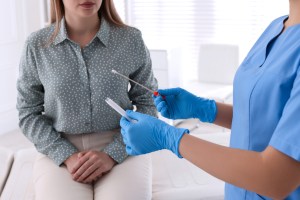
HPV is another taboo topic that 35 per cent of women don’t like to discuss. However, it is constantly talked about in the media due to its association with cervical cancer. I went through that whole rigmarole of having a biopsy and then a loop incision because of dodgy cells caused by HPV. Where it came from I have no idea, it lies dormant in many women for years. As soon as I’d been through that process I was a lot more open about it with colleagues and friends and I couldn’t believe how many women had been through the exact same thing! It shocked me how common HPV is and I now know if I had talked about it when they first found the dodgy cells I would have felt a lot more reassured about the treatment.
As well as any infections or diseases or incontinence, according to the study women also find it hard to discuss birth. I have never found this. One of the fun sides of becoming a mum is discussing all the birth stories with other new mums you meet. I’m sure some women don’t want to share the details, and I get it’s not something to bring up with your father-in-law over Sunday lunch, but we shouldn’t feel ashamed to talk about our experiences. And for a lot of us, sharing the story helps us to process our own.

Time for change
And that should be the case with all our health issues. Dr Kiran Johal, Medical Advisor at Vitality, agrees saying: “Although significant progress has been made in the area of women’s health and our attitudes towards it, taboos do still exist.
“Talking about a health concern has the potential to save lives, whether that’s encouraging someone to attend a screening appointment or finding support in others going through the same experience. Remember, keeping things to yourself can be isolating and the only way to break the stigma is by talking – the more open you are about your health, the faster you can access the support you need.”
So take it from me, next time you feel a niggle or a worry pick up the phone and talk it through. We wouldn’t feel embarrassed if we broke a leg so why do we when it’s about our vaginas? Let’s get rid of these taboos for good.
For help or advice on any health issues you’re concerned about visit the NHS website here. If you have a story to tell us about your own health concerns, please get in touch here.
 The Joy